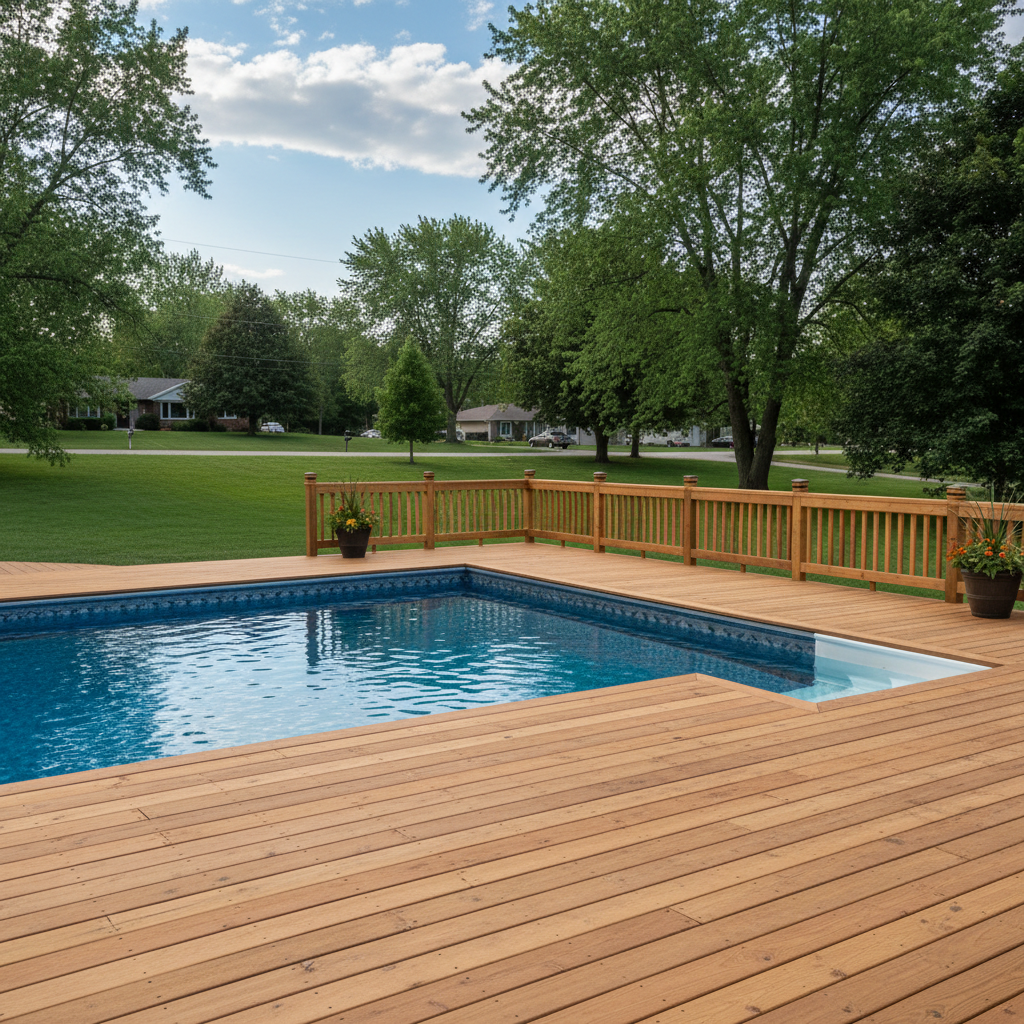
Alright, let's get straight to it. You want a pool deck, and you're probably wondering what it's going to cost you. I totally get it. Nobody likes surprises, especially with big projects like this. As a local builder right here in Rockford, I've seen a ton of pool decks go in, and I can tell you there's no single price tag. But what I *can* do is give you a solid breakdown of what drives the cost and what kind of budget you should be thinking about.
Why Do Pool Deck Prices Jump Around So Much?
A few big things really make the price go up or down. It's not just about the size, though that's a huge factor, of course. Think about these points:
- Material Choices: This is probably the biggest one, hands down. Are we talking about basic treated lumber, composite decking, or something a bit fancier like PVC or even natural stone? Each option comes with its own price, durability, and how much work it'll need over time. For instance, a composite deck will usually cost more upfront than treated wood, but you'll spend way less time staining and sealing it in the long run.
- Size and Shape: Obvious, right? A small, rectangular deck around a little kiddie pool will be a lot cheaper than a sprawling, multi-level design surrounding an Olympic-sized inground pool. Decks with complex shapes, lots of curves, or tricky angles also demand more time and materials, and that adds to the final bill.
- Height and Structure: Will your deck be right on the ground, or does it need to be raised up to meet an above-ground pool? Elevated decks need more structural support, more posts, and often more complex framing. All that means more labor and more materials.
- Features and Add-ons: Railings, built-in benches, steps, lighting, pergolas, privacy screens – these all hike up the final price. A simple deck might not need much, but if you're dreaming of a full outdoor living space, those extras can really add up.
- Site Prep: Sometimes, the ground around your pool isn't perfectly level or stable. We might need to do some extra grading, put in retaining walls, or even bring in fill dirt. Here in Rockford, especially in older neighborhoods with mature trees, root systems or uneven terrain can sometimes require a lot more site work than you'd initially expect.
Typical Pool Deck Costs in Rockford
Okay, let's talk numbers. Keep in mind these are general ranges for the Rockford area, and your specific project could fall outside them depending on all those factors I just mentioned. These prices usually cover materials, labor, and basic site prep, by the way.
- Treated Lumber Deck: For a basic, ground-level treated lumber deck around a standard 18-foot round above-ground pool, you're probably looking at $25 - $40 per square foot. If you have an inground pool, a larger, more complex treated lumber deck might run $30 - $55 per square foot. So, a 300 sq ft deck could be anywhere from $7,500 to $16,500.
- Composite Decking: This is where most folks land for a good mix of looks and low maintenance. For composite, expect to pay $45 - $75 per square foot. A 300 sq ft composite deck would likely cost you between $13,500 and $22,500. Brands like Trex or Azek are popular choices and fit right into this range.
- PVC or Premium Composite: If you're aiming for top-tier, ultra-low maintenance PVC or a high-end composite, the cost can climb to $60 - $90+ per square foot. This is for the absolute best in durability and aesthetics, often coming with extended warranties.
- Pavers or Concrete: While not technically a 'deck' in the traditional sense, many people consider these for pool surrounds. Concrete can range from $8 - $15 per square foot for a basic brushed finish, while stamped or decorative concrete can be $15 - $30 per square foot. Pavers typically run $20 - $40 per square foot installed, depending on the type and how complex the pattern is.
Remember, these are just starting points. If you want fancy railings, built-in seating, or extensive lighting, you'll definitely add to these figures.
What Should Your Quote Include?
When Valley Decking or any other reputable contractor gives you a quote, it shouldn't just be a single number. You need to see a breakdown, right? Here's what I always make sure to include:
- Detailed Material List: What kind of decking, framing lumber, fasteners, and railings are we using? Specific brands and types are important.
- Labor Costs: How many hours or days do we estimate for the build?
- Site Preparation: Any grading, excavation, or debris removal.
- Permits and Inspections: We handle getting the necessary permits from the city or county. This is non-negotiable for a safe, legal build, after all.
- Waste Removal: What happens to the old deck materials or construction debris? It should be hauled away.
- Warranty Information: What's covered, and for how long?
Don't Overpay: Smart Moves to Save Cash
You don't want to get ripped off, and I certainly don't want to see that happen to you. Here’s how to be a smart shopper:
- Get Multiple Quotes: This is basic, but essential. Talk to at least three reputable contractors. Make sure they're quoting on the same scope of work and materials.
- Be Specific About Materials: Don't just say