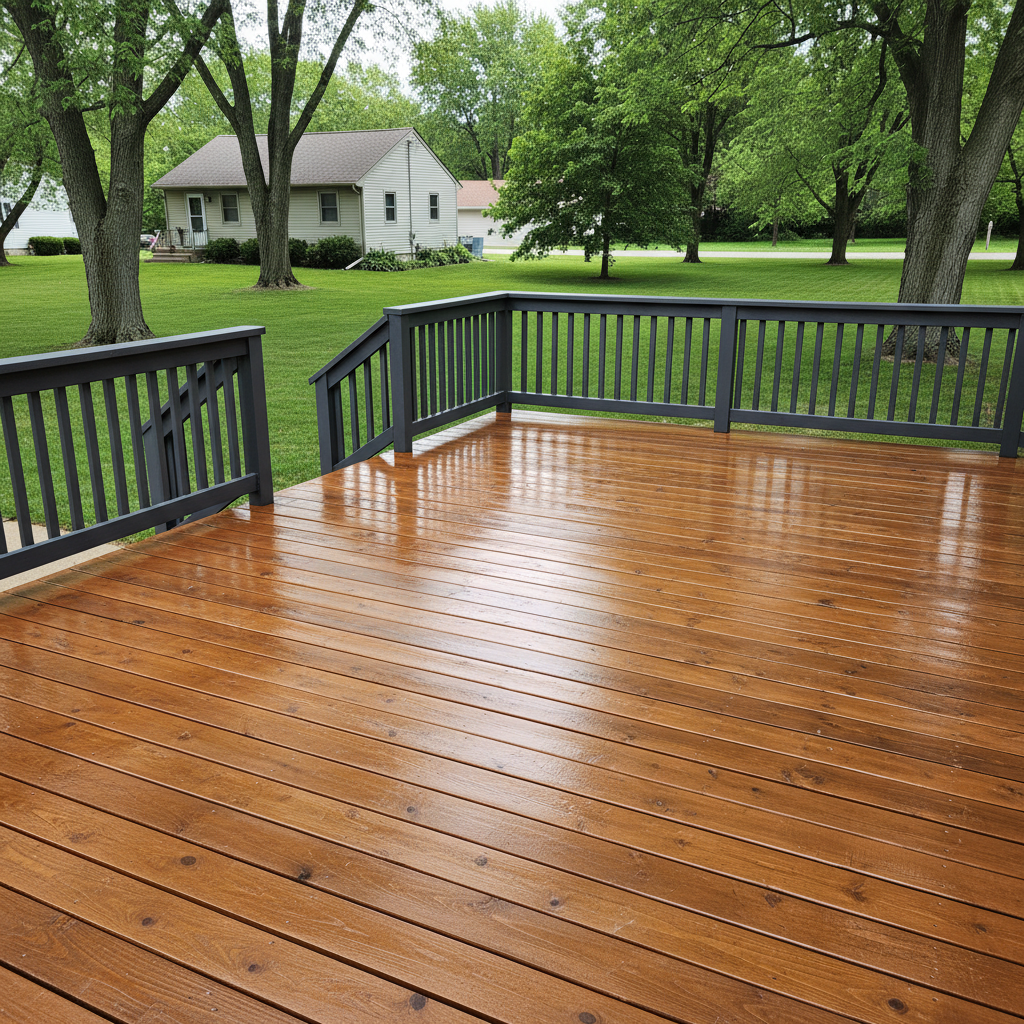
Your deck's looking a little rough, huh? Or maybe you just had it done and you want to make sure it stays looking good for years. Either way, when it comes to deck staining and painting here in Rockford, you've got to be smart about maintenance. It's not just about curb appeal; it's about protecting your investment from our crazy Illinois weather.
Extend That Deck's Life: It's All About Protection
Think of stain or paint as your deck's armor. It's what stands between your wood and the sun, rain, snow, and everything else Mother Nature throws at it. Here in Rockford, we get the full spectrum: scorching summers, brutal winters with freeze-thaw cycles, and plenty of humidity. That's a lot for a deck to handle.
The biggest thing you can do to extend the life of your deck's finish is to choose the right product in the first place. I always recommend a high-quality, penetrating oil-based stain for most decks. It soaks into the wood, protecting it from within, and it tends to wear more gracefully than a film-forming paint. Paint looks great initially, but it's more prone to peeling and chipping, especially on horizontal surfaces that get a lot of foot traffic and sun exposure. If you've got a painted deck, you'll likely be doing more frequent touch-ups.
Beyond product choice, proper application is huge. If the wood isn't clean and dry when the stain or paint goes on, it's not going to stick right, and you'll be redoing it sooner than you'd like. That's where a pro like Valley Decking comes in, making sure the surface is prepped perfectly.
Regular Maintenance: Your Deck's Best Friend
Okay, so you've got a good finish on there. Now what? Regular maintenance isn't rocket science, but it makes a world of difference. Here's what I tell my customers:
- Keep it Clean: This is probably the easiest thing you can do. Sweep off leaves, dirt, and debris regularly. Don't let puddles sit for long periods. Once or twice a year, give it a good wash. A mild deck cleaner and a stiff brush (not a wire brush!) work wonders. Rinse thoroughly.
- Watch for Mildew: Our humidity here in Illinois, especially in shaded areas or decks that don't get much sun, can lead to mildew growth. It looks like black spots or a greenish film. If you see it, clean it off promptly with a mildew-specific deck cleaner. Don't let it sit and eat away at your finish.
- Trim Back Vegetation: Overhanging branches or bushes growing too close to the deck can keep it damp, promote mildew, and drop debris. Give your deck some breathing room.
- Check Fasteners: While you're out there, just take a peek at your screws and nails. If any are popping up, secure them. Loose fasteners can trap water and start to rot the wood around them.
These little steps prevent small problems from becoming big, expensive ones.
Warning Signs: When Your Deck Needs Attention
Your deck will tell you when it needs help, you just have to know what to listen for. Or, in this case, what to look at:
- Fading or Dullness: This is usually the first sign. The color starts to look washed out, especially in high-traffic areas or spots that get a lot of sun. This means the protective qualities of the stain are wearing thin.
- Water Absorption: Do a splash test. Pour a little water on the deck. If it beads up, your finish is still doing its job. If it soaks right into the wood and darkens it, your deck is thirsty for a new coat of stain.
- Peeling or Flaking: This is more common with paint or film-forming stains. If you see the finish lifting or flaking off, it means the bond to the wood has failed. This needs to be addressed quickly, as exposed wood will start to deteriorate.
- Graying Wood: If you see areas of wood turning gray, that's UV damage. The sun is literally cooking the lignin in the wood. Once it's gray, it's losing its structural integrity and needs immediate attention.
- Cracking or Splintering: This indicates that the wood is drying out and losing its natural oils. A good stain helps prevent this by keeping moisture levels stable.
Don't ignore these signs. A small touch-up now can save you from a full strip and re-stain later.
When to Call a Professional
Look, I'm a big believer in DIY when it makes sense. But sometimes, you need a pro. Here's when to pick up the phone:
- Extensive Peeling or Flaking: If your painted deck is peeling everywhere, you're looking at a full strip, not just a recoat. That's a big job, and doing it right requires specialized equipment and expertise.
- Significant Graying or Damage: If large sections of your deck are gray, cracked, or splintering, the wood might need more than just a cleaning and stain. It might need sanding, or even replacement of some boards.
- You're Short on Time or Tools: Let's be real, life gets busy. Prepping a deck properly is time-consuming. If you don't have a pressure washer, a good orbital sander, or the patience to do it right, it's worth calling someone.
- You Want a Flawless Finish: There's a difference between a decent DIY job and a professional finish. We've got the experience to ensure even coats, no lap marks, and a truly beautiful result. Plus, we know how to handle the varying moisture levels we get, especially in areas like the older homes in the Edgewood neighborhood where decks might be shaded and hold dampness longer.
Taking care of your deck's finish isn't just about making it look nice; it's about protecting the wood underneath. A well-maintained deck will serve you and your family for many years. Neglect it, and you'll be facing expensive repairs or even a full replacement much sooner than you'd like. Keep an eye on it, give it some love, and it'll love you back.