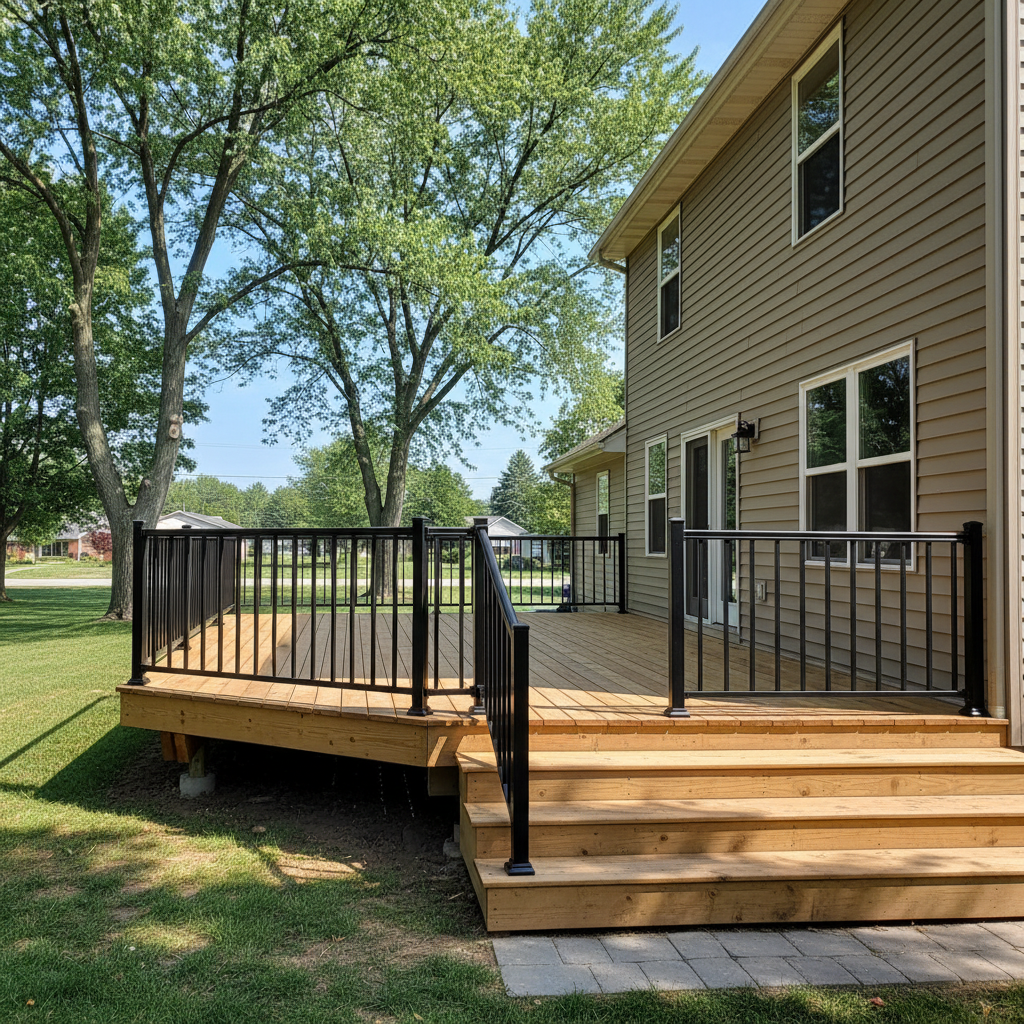
So, you've got a deck, or you're planning one, and now you're thinking about railings. Good. Railings aren't just about looking nice; they're about keeping your family and friends safe. And let's be honest, in Rockford, with our unpredictable weather – from icy winters to humid summers – you want something sturdy and reliable.
A lot of folks ask me, "What's this going to cost me?" And while it's true that 'it depends' is often the answer, I can give you some real numbers and what factors push those numbers up or down. I've been doing this for a long time, and I've seen everything from DIY disasters to top-tier installations, so I know what's what.
What Makes Railing Prices Go Up or Down?
There are a few big things that dictate the final price tag on your deck railings. It's not just the material itself; it's the whole package.
- Material Choice: This is probably the biggest one. Wood, composite, aluminum, steel, glass – they all have vastly different price points.
- Linear Footage: Simple math here. The more railing you need, the more it costs. A small 10x10 deck will be a lot less than a sprawling multi-level setup.
- Design Complexity: Straight runs are cheaper. Curves, custom angles, intricate patterns, or integrating lighting? Those add labor and material costs.
- Post Type & Spacing: Standard 4x4 wood posts are one thing. Decorative aluminum posts, or posts that need to be specially anchored into concrete, will be more. Building codes dictate spacing, and sometimes, that means more posts than you might expect.
- Installation Labor: This varies by contractor and the complexity of the job. Some materials are quicker to install than others. Custom work always takes more time.
- Site Conditions: Is your deck easy to access? Is it high off the ground, requiring scaffolding? Are there old railings that need to be removed and disposed of? These can all factor into the labor cost.
Typical Cost Ranges for Different Railing Materials in Rockford
Alright, let's get to some actual numbers. These are general ranges per linear foot, including installation, based on what I see here in the Rockford area. Keep in mind, these are estimates, and a detailed quote is always best.
- Pressure-Treated Wood: This is usually your most budget-friendly option. You're looking at roughly $35 - $65 per linear foot. It's classic, but it needs regular maintenance like staining or painting.
- Composite Railing: A step up from wood, offering less maintenance. Brands like Trex or Azek are popular. Expect to pay around $55 - $95 per linear foot. It's durable and comes in various colors, but can sometimes feel less rigid than metal.
- Aluminum Railing: This is a fantastic choice for durability and low maintenance. It's strong, doesn't rust, and looks sleek. You're generally in the range of $70 - $120 per linear foot. Great for modern homes or those looking for a clean, unobstructed view.
- Steel Railing (Powder-Coated): Even stronger than aluminum, often used for a more industrial or custom look. Prices can start around $85 and go up to $150+ per linear foot, especially for custom fabrication.
- Cable Railing: A popular modern option that provides excellent views. It involves metal posts with horizontal stainless steel cables. This usually runs from $100 - $200+ per linear foot due to the specialized hardware and installation.
- Glass Panel Railing: The most expensive, but offers an unbeatable, unobstructed view. It's typically tempered glass panels held by metal posts or channels. Expect to pay anywhere from $150 - $300+ per linear foot. This is a premium product.
Remember, these numbers can fluctuate based on the specific product line, color choices, and any premium features like integrated LED lighting.
What Should a Good Quote Include?
When you get a quote from Valley Decking, or any reputable contractor, it shouldn't just be a single number. You need to see the breakdown. Here's what a comprehensive quote should cover:
- Detailed Material List: Specific railing system, post type, balusters/infill, caps, hardware, etc.
- Linear Footage Calculation: How much railing they're actually quoting for.
- Labor Costs: Clearly outlined.
- Permit Fees: In Rockford, you'll need a permit for most deck work, including new railings if they're part of a larger project or significantly altered. A good contractor handles this.
- Old Railing Removal & Disposal: If applicable, this should be itemized.
- Warranty Information: Both for the materials and the installation.
- Payment Schedule: How and when payments are due.
- Start and Estimated Completion Dates.
If a quote just gives you a lump sum and won't break it down, that's a red flag. You need to know what you're paying for.
How to Avoid Overpaying for Your Deck Railings
Nobody wants to get ripped off, especially on something as important as deck safety. Here's my advice:
- Get Multiple Quotes: Don't just go with the first guy. Get at least three detailed quotes from different reputable contractors in the Rockford area. This helps you compare apples to apples.
- Understand the Scope: Make sure each quote is for the exact same thing. If one contractor is quoting for basic wood and another for premium composite, the prices will be wildly different, and it's not a fair comparison.
- Check References & Reviews: See what other homeowners in areas like the older bungalows in the Churchill's Grove neighborhood or the newer builds out by Cherry Valley have to say about their work.
- Don't Be Afraid to Ask Questions: If something in the quote isn't clear, ask. A good contractor will take the time to explain everything.
- Beware of Extremely Low Bids: If one quote is significantly lower than the others, there's usually a reason. It could mean cheaper materials, cutting corners on labor, or not including everything. You don't want to sacrifice safety for a few bucks.
- Consider DIY (with caution): If you're handy, you might save on labor by installing some railing systems yourself. But be honest about your skill level and time commitment. Railings need to be installed perfectly to meet code and be safe. If you're unsure, hire a pro.
Ultimately, investing in quality deck railings is investing in the safety and longevity of your outdoor living space. Do your homework, get solid quotes, and don't compromise on quality. Your peace of mind is worth it.