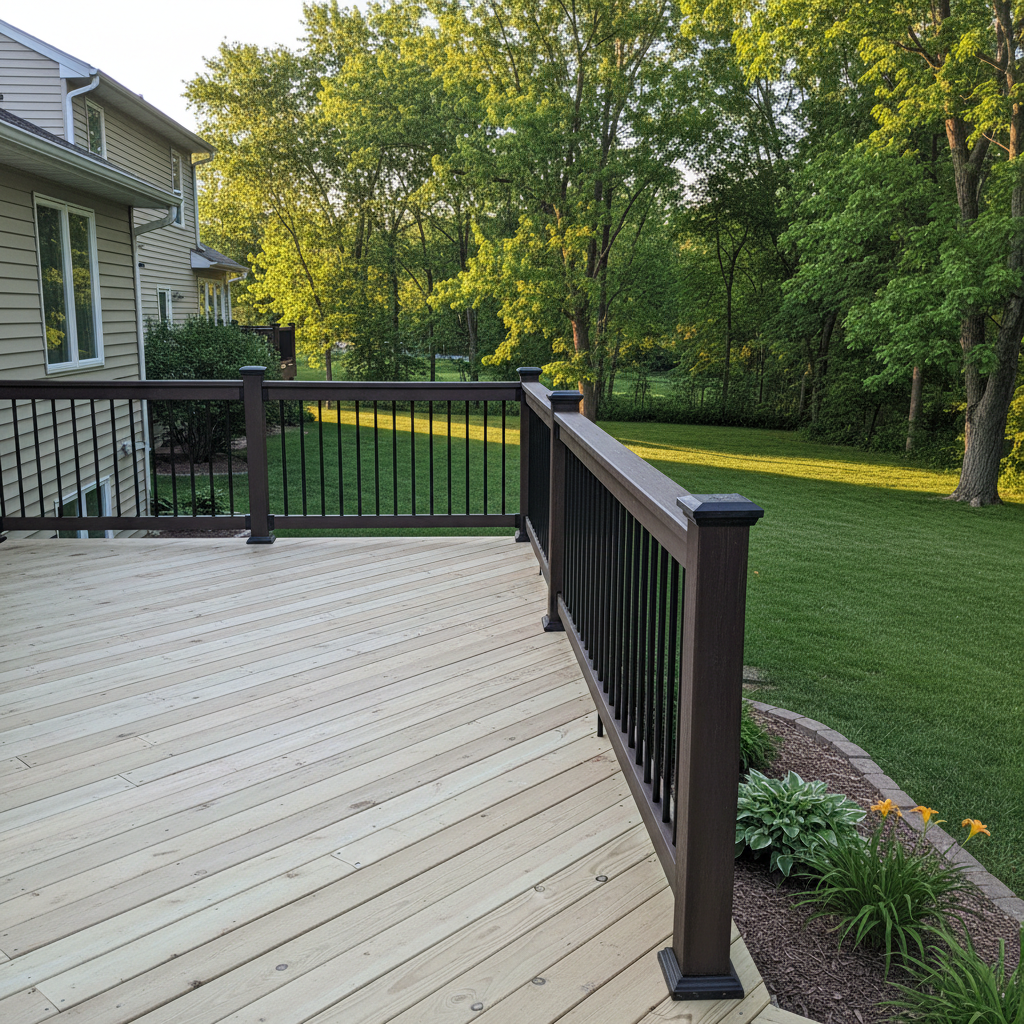
You've got a great deck, maybe we even built it for you at Valley Decking, and those railings are a big part of its appeal and, more importantly, its safety. But once they're up, the job isn't over. Our Rockford weather, with its brutal winters and humid summers, really puts a strain on outdoor structures. Taking care of your railings isn't just about making them last; it's about keeping your family and friends safe.
Extending the Life of Your Railings: It's All About Protection
Think of it like this: your railings are constantly battling the elements. Sun, rain, snow, ice – they all take their toll. The good news is, a little proactive work goes a long way.
- Seal and Stain Regularly (Wood): If you've got wood railings, this is your number one defense. A good quality stain or sealant protects against moisture, UV rays, and rot. I tell folks around here, especially with the freeze-thaw cycles we get in Winnebago County, you should plan on reapplying every 2-3 years, maybe even annually for high-exposure areas. Don't wait until the wood looks faded or starts to splinter. Catch it early.
- Clean and Protect (Composite/Vinyl): These materials are lower maintenance, but not no maintenance. A good wash with mild soap and water a couple of times a year will prevent mildew and grime buildup. For vinyl, UV protectants can help prevent fading and chalking over time.
- Check Fasteners (All Materials): This is huge. The screws, bolts, and nails holding your railings together can loosen up over time due to expansion and contraction from temperature changes. Give them a once-over every spring and fall. Tighten anything that feels wobbly. If you see rust on metal fasteners, consider replacing them before they compromise the integrity of the railing.
- Mind the Ground Contact: Where posts meet the deck surface, or even the ground if you have ground-level railings, is often where problems start. Make sure water isn't pooling there. Good drainage is key.
Regular Maintenance: Your Seasonal Checklist
I always tell my customers to make a habit of checking their deck railings, especially after our wild weather swings. Here's what I recommend:
- Spring Cleaning & Inspection: After the snow melts and things dry out, give your railings a thorough cleaning. Look for any winter damage – loose boards, cracked vinyl, rust spots. This is the time to re-stain or seal wood railings if they're due.
- Summer Spot Checks: During the warmer months, you're probably using your deck more. Keep an eye out for any splinters, loose balusters, or wobbly sections. Address small issues before they become big ones.
- Fall Prep: Before winter sets in, clean your railings one last time. Make sure there's no debris trapped that could hold moisture and freeze. Double-check all fasteners. If you have any decorative caps, ensure they're secure to prevent water intrusion into the posts.
Warning Signs: Don't Ignore These
Your railings will tell you when something's wrong, you just have to know what to look for. Ignoring these signs is asking for trouble.
- Wobbling or Loose Sections: If you can shake a section of railing and it moves significantly, that's a red flag. It means fasteners are loose, or the posts themselves might be compromised.
- Rot or Soft Spots (Wood): Poke at the wood, especially near the ground or where it connects to the deck. If it feels soft or spongy, you've got rot. This weakens the structure and needs immediate attention.
- Cracks or Splitting (Wood/Composite/Vinyl): Small hairline cracks might be cosmetic, but larger, deeper cracks can indicate structural issues or significant material degradation. For vinyl or composite, chalking or excessive fading can mean the material is breaking down.
- Rust or Corrosion (Metal): Any significant rust on metal components isn't just ugly; it weakens the metal. If it's on structural bolts or post anchors, it's a serious concern.
- Missing or Damaged Balusters: These aren't just decorative; they prevent falls. If any are missing or broken, replace them right away.
When to Call a Professional: Don't DIY Everything
Look, I'm all for homeowners tackling projects, but some things are best left to the pros. When it comes to deck railings, especially if safety is involved, you don't want to guess.
- Major Structural Damage: If you've got significant rot in posts, widespread wobbling that tightening fasteners doesn't fix, or if the entire railing system feels unstable, call us. This often means the underlying structure is compromised, and that's a job for experienced hands.
- Post Replacement: Replacing a deck post, especially one that's integrated into the deck frame, isn't a simple task. It requires specific tools, knowledge of deck construction, and ensuring it meets local building codes.
- Code Compliance Concerns: If you're unsure if your railings meet current safety codes (height, baluster spacing, etc.), especially if you've bought an older home, it's worth having a professional inspection. Codes change, and what was fine 20 years ago might not be today.
- Extensive Repairs: If you're looking at replacing multiple sections, or if the damage is widespread, it's usually more efficient and safer to bring in a contractor like Valley Decking. We've got the experience and the right materials to get it done right the first time.
Your deck railings are a critical safety feature and a big part of your deck's appearance. A little attention goes a long way in keeping them strong and looking good for years to come. Don't neglect them, especially with the kind of weather we get here in Rockford.